
In July, Luton Council published a new driving-at-work procedure, and one line in it sums up the law well: the car a member of staff drives for work, “regardless of ownership, is regarded as a place of work”, so the council owes the same duty of care to people driving their own cars as to anyone in a council vehicle.¹
Every employer is in the same position, and grey-fleet duty of care carries higher stakes than the mileage bill. In 2025, 445 people were killed on Britain’s roads in collisions involving someone driving for work: 29% of all road deaths.²
What does duty of care cover when staff drive their own cars?
HSE guidance says the law applies to company and grey fleet vehicles alike, and your risk assessment should look at the journey, the driver and the vehicle.³ For a staff member’s own car, that means being able to show they hold a valid licence, their insurance covers business use, and the car is taxed, MOT’d and roadworthy. (Standard social, domestic and pleasure cover usually excludes business use, so it’s worth asking to see the policy.)
A lot of public-sector driving runs through private cars: community nurses, social workers, environmental health officers and therapists on home visits. In June the NHS Staff Council asked employers to agree extra fuel support for staff “who use their own, or a lease vehicle for work purposes”.⁴
Where does the duty land day to day?
The duty sits with the organisation, but day to day it lands on managers. The Royal Wolverhampton NHS Trust’s driving policy puts it directly: “Those who have managerial responsibilities hold the duty of care for their staff and to the Trust.”⁵ That’s often a ward manager or team lead with a spreadsheet of expiry dates.
A 2017 Wales Audit Office review of grey fleet at the Welsh Blood Service found “no formal checks of drivers’ licences and insurance” and no arrangement for checking MOTs.⁶ The trust accepted most of the recommendations, and it’s an old report, but I’d expect plenty of fleet managers to recognise the picture.
Why is checking a private car so hard?
You can check a licence against DVLA records. A car is harder: you see an insurance certificate once a year and won’t know if someone moves to a policy without business cover halfway through, and an MOT only shows the car passed on the day of the test. In many organisations that leaves an annual declaration from the driver.
How does a pool car change the evidence?
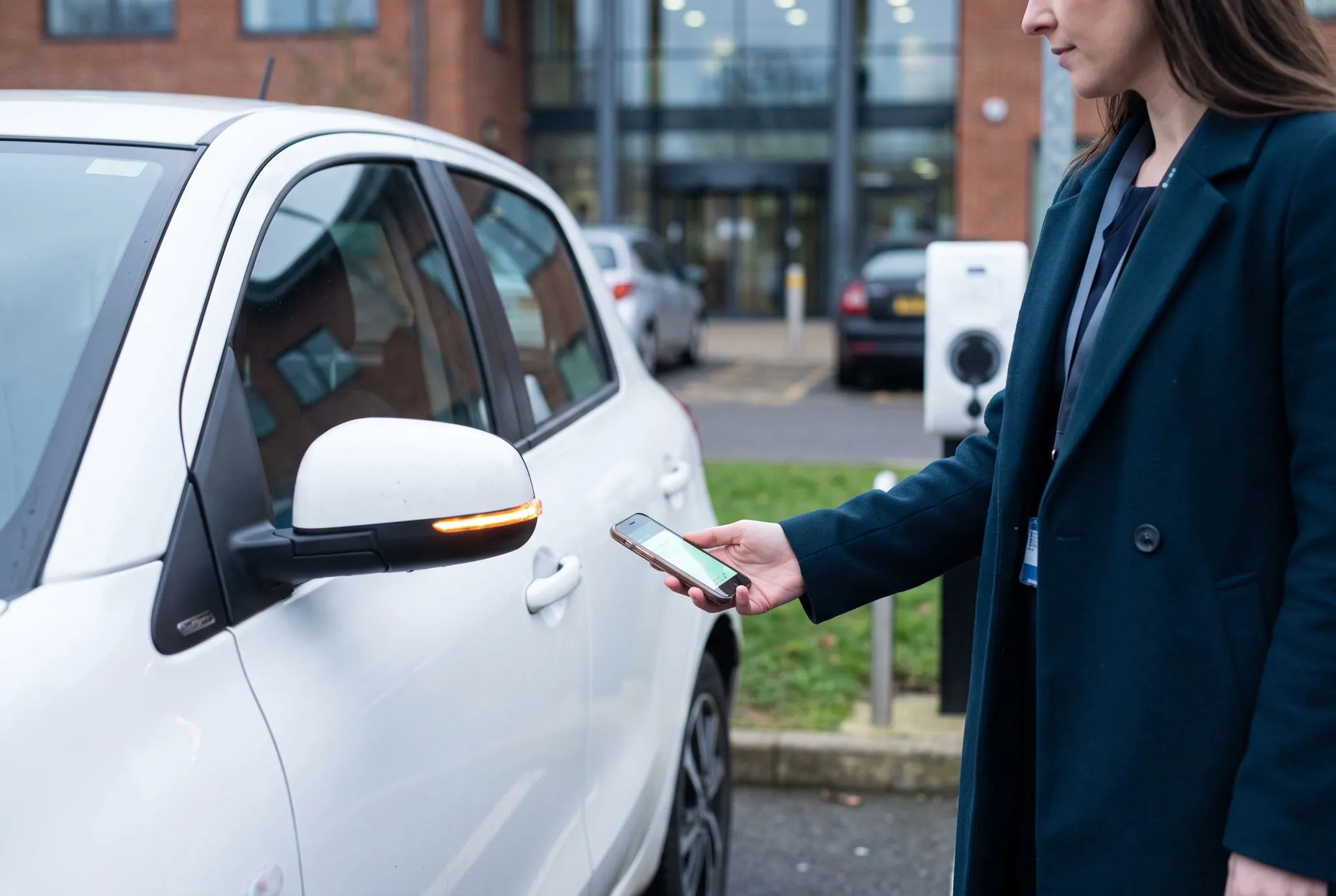
A pool car is a vehicle you own or lease, so its business insurance, servicing and MOT are arranged by you or your leasing company, not by each driver. That’s one set of vehicle checks, however many people drive it. We add the driver and trip records: staff verify their licence and ID once in the Kerbway app before their first booking, and every trip is logged, so councils and NHS trusts can show who drove which vehicle and when. That’s far easier to produce from a booking record than from a folder of photocopies.⁷
A pool won’t cover every journey. A community nurse starting a round of home visits from home may still be better off in their own car, and fatigue and journey planning stay with you whoever owns the vehicle. Trips that start and end at the same base, like the cross-site meeting or the clinic run, are the easiest to move.
What should you do next?
- Count how many staff claimed mileage last year, and how many of them have a current licence, insurance and MOT check on file.
- Ask who holds the duty of care for each team, and whether they know it.
- Pick out the journeys that start and finish at the same base: those are your pool candidates. The grey-fleet calculator will put a cost on them.
If you run a grey-fleet duty-of-care process that works well, I’d like to hear how you do it.
Notes // Citations // Disclosures
- Luton Council, Driving at work procedure and guidance (version 1.0, July 2026), paragraph 1.5.
- Department for Transport, Reported road casualties Great Britain: estimates involving driving for work (2025 data). Counts collisions involving at least one driver or rider travelling for work, in any vehicle.
- Health and Safety Executive, Employers: driving and riding safely for work
- NHS Employers, NHS Staff Council joint statement on the increase in fuel prices (June 2026)
- The Royal Wolverhampton NHS Trust, HS33 Driving for Work: All Vehicles (version 3.0), section 3.3.
- Wales Audit Office (now Audit Wales), Velindre NHS Trust: Grey Fleet Management, Welsh Blood Service (January 2017)
- Kerbway provides the technology and service for shared staff pools, which this article suggests for some journeys.