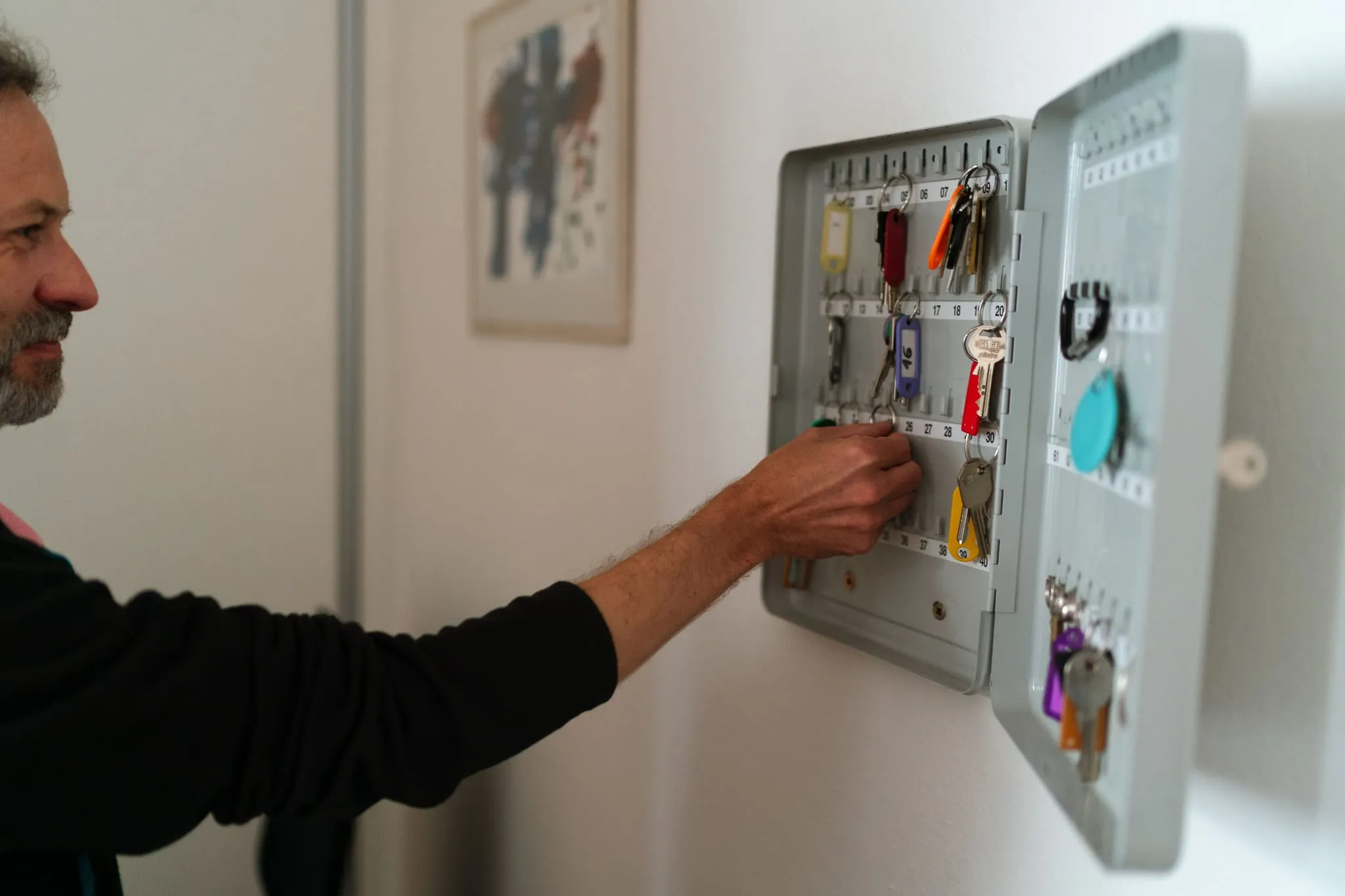
Ask a facilities team where their pool cars lose time and the answer is rarely the cars. It’s the keys. Collecting them, signing them out, chasing the person who took one home in their coat pocket. The key cupboard sets a ceiling on how often a shared vehicle gets shared, and most organisations never measure it.
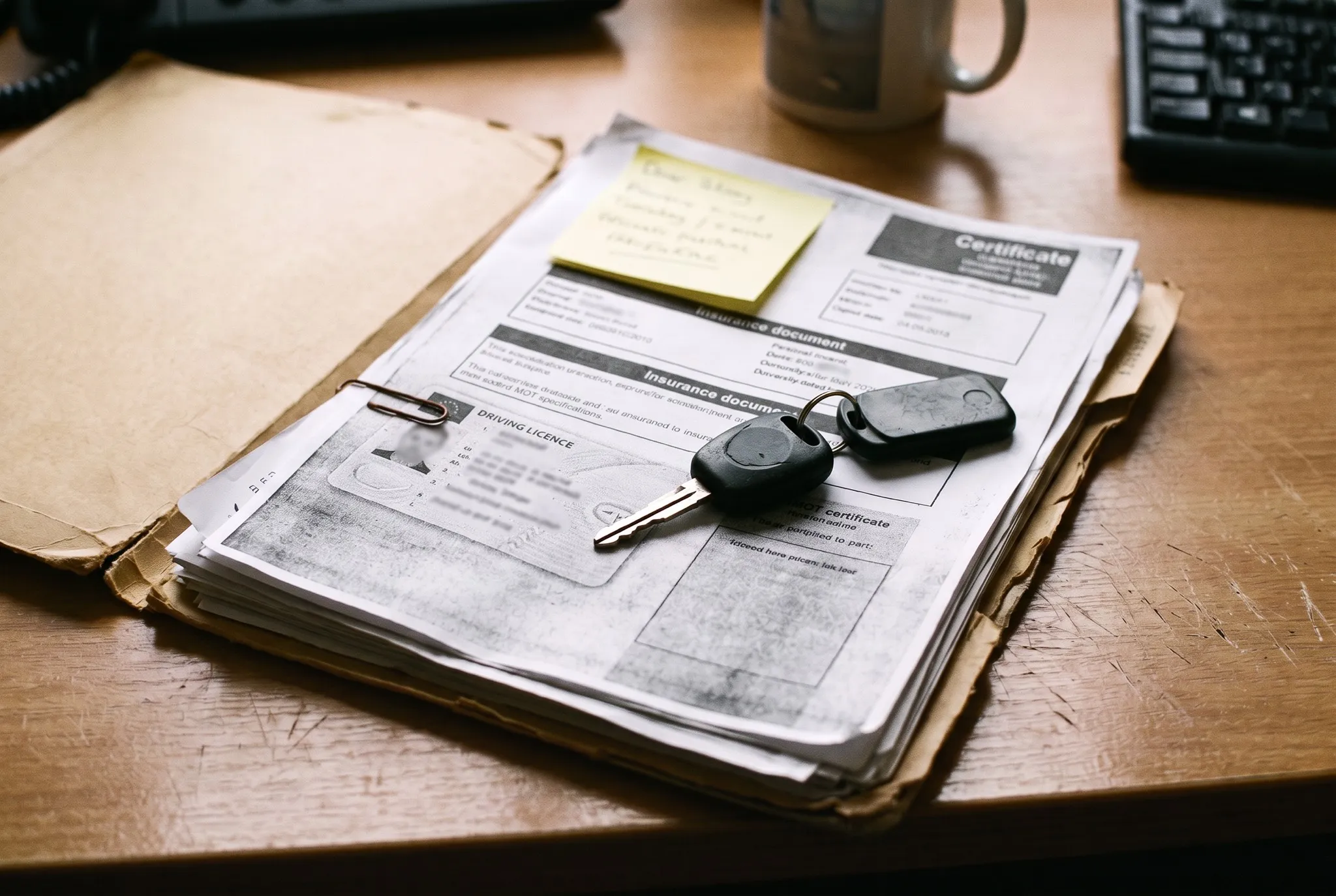
Moving the key onto the driver’s phone removes much of that. It also helps with two problems that don’t look like key problems until you go looking: showing HMRC that a pool car really is a pool car, and showing you’ve checked who’s driving.
What does a physical key cost you?
A key has to live somewhere, be handed over by someone and come back before the next driver can go. Each of those steps is a chance to lose time:
- The car’s free in the diary, but the key is in another building (or in yesterday’s driver’s bag).
- Someone has to be at reception to hand keys out, so a 7am start for a site visit means a member of staff in at 7am too, or the key going home the night before.
- The sign-out sheet records who took the key. It doesn’t say who drove, how far, or when the car actually came back.
Then there’s losing them. When the RAC surveyed 2,068 drivers in 2018, 1 in 20 admitted to permanently losing a car key, and those who bought a replacement paid £176 on average, with transponder keys costing up to £500. A pool car key passes through far more hands than a private one, and while it’s missing the car is off the road.
When the key goes home, so can the tax bill
For HMRC to treat a car as a pool car, with no benefit-in-kind charge for the people who drive it, it has to meet five conditions. Among them: it’s used by more than one employee, it isn’t ordinarily used by one of them to the exclusion of the others, any private use is merely incidental, and it’s not normally kept overnight at or near anyone’s home. Fail any one and it isn’t a pool car.
HMRC’s guidance accepts taking a pool car home the evening before an early business trip. It also warns that doing it too often breaks the overnight condition, and its rule of thumb is that a car taken home on 60% or more of nights is “normally” kept there. Well before that point, the journeys home are unlikely to count as incidental.
A key in a cupboard (or missing from it) tells you very little about where a car spent the night. A booking record for every trip, on a car you can locate, tells you a lot more. If you’re ever asked to show that your pool cars are pool cars, that’s the evidence you’ll want. And if you think some of yours are drifting towards one person’s driveway, take advice sooner rather than later.
Duty of care doesn’t stop at the cupboard
HSE’s guidance is that health and safety law covers driving for work, and that it applies to staff in their own cars (the grey fleet) as much as to company vehicles. Part of that is knowing your drivers are licensed and your vehicles are safe to use.
A key cupboard will hand a key to anyone who can reach it. With keyless access, only drivers who’ve completed the licence and ID check in the Kerbway app can book, so the check happens once, up front, and nobody’s licence photocopy is sitting in a drawer.
What changes when the key is your phone?
With Kerbway, the driver finds an available vehicle in the app, books it and unlocks it with their phone. There’s no cupboard and no handover:
- Access is granted for the booking and revoked automatically when it ends, so there’s no key to keep or forget to hand back.
- Early starts and late finishes for business trips don’t depend on who’s at reception.
- Every unlock is logged against a driver and a booking, so you can see who used which car and when.
- Each booking is costed and allocated to the team or cost centre that made it, which is the number you need to put the pool next to what you pay in mileage claims.
The kit is hardware-agnostic and fits to the vehicles you already run, owned or leased, so there’s nothing to replace. You can see the full journey here, or what it looks like for facilities and estates teams who inherited the key cupboard along with the cars.
Why not use the carmaker’s digital key?
Phone car keys already exist on some newer cars. The Car Connectivity Consortium, whose members include Apple and Samsung as well as carmakers such as BMW, Hyundai and Volkswagen, publishes a Digital Key standard, and its third release in 2021 added hands-free unlocking over ultra-wideband so the phone can stay in your pocket.
Those keys are built for an owner sharing a car with family or a friend. A pool needs one system across a mix of makes and ages (including cars with no digital key at all), access that follows a booking rather than a person, a licence check before anyone can unlock, and records the organisation can report on.
Questions to ask before you go keyless
Whoever you talk to, these are worth asking:
- How does a car unlock in an underground car park, or anywhere with no mobile signal?
- What happens if a driver’s phone dies partway through a trip, with the car locked at a site?
- Where does the original key live once the car is keyless, and who can get to it?
- Does the kit fit the vehicles you actually have, including older models and vans, and what does fitting involve?
- If someone leaves, or loses their licence, how quickly can they be stopped from booking?
- Who can see trip records, how long are they kept, and what will you tell staff about them?
What’s next
If your pool cars still run on physical keys, a few numbers will tell you what the cupboard is costing:
- Count a week of handovers, and how many of them needed someone to be there.
- Check how many nights each pool car spent away from base last month.
- Add up how many keys you’ve replaced in the last year, and what they cost.
If you’ve already moved your pool cars off physical keys, what caught you out? I’d like to hear it.
Notes // Citations // Disclosures
- HMRC, Employment Income Manual EIM23450: pooled cars, conditions
- HMRC, EIM23455: pooled cars, private use merely incidental
- HMRC, EIM23465: pooled cars, not normally kept overnight at home
- HSE, Employers: driving and riding safely for work
- RAC, Motorists have spent over £181m replacing lost car keys (May 2018)
- Car Connectivity Consortium, Digital Key; Help Net Security, CCC Digital Key 3.0 enables hands-free access
- Kerbway supplies keyless access and booking for pool fleets. This isn’t tax advice: check pool car status with your adviser.