In February 2026 the Upper Tribunal turned down an appeal by two companies that had treated a set of cars as pool cars for more than 20 years, on the strength of a meeting with a tax inspector in 1993. HMRC collected employer National Insurance on the cars for 2015 to 2020 anyway.1 Then, on 9 November, HMRC published guidance on a change that follows: from 6 April 2027, company cars have to be reported and taxed through payroll in real time.2
The rules on what counts as a pool car haven’t changed. Being wrong about which of your cars are pool cars has got more expensive, though, and it’s harder to put off checking.
What is a pool car?
A pool car is a vehicle an employer keeps for business journeys, shared between staff and not allocated to anyone. If it qualifies, nobody who drives it pays benefit-in-kind tax on it, and you don’t pay Class 1A National Insurance or report it as a benefit. The law treats it as not available for anyone’s private use.3
What are the HMRC rules for pool cars?
HMRC’s rules say a pool car must meet five conditions in the tax year, and failing any one means it’s taxed as a company car.3 4 The conditions are:
- It’s available to, and actually used by, more than one employee.
- It’s available to each of them because of their job.
- It isn’t ordinarily used by one of them to the exclusion of the others.
- Any private use by each of them is merely incidental to their business use.
- It isn’t normally kept overnight at or near any of their homes (unless that’s on the employer’s own premises).
HMRC’s guidance puts it plainly: “It is not enough that a car satisfies any four of them and narrowly fails the fifth.”4 The test also runs car by car across every driver. HMRC’s guidance says a single employee can’t show the car is a pool car by pointing to their own use alone; the question is how everyone used it.5 So one person’s regular private trips can cost a car its status for the whole year.
If the car really is shared, the first three conditions are usually met. The incidental-use and overnight tests are the ones to watch.
What counts as merely incidental private use?
HMRC asks why a private stretch of a journey happens, rather than how long it is. It’s fine if it only exists to serve a business journey.6 Its own example is taking a pool car home the evening before a long business trip so you can make an early start. The drive home is private, but it’s there for the trip the next day, so it counts as incidental.
Commuting for its own sake isn’t. Nor is borrowing the car because your own has broken down: HMRC’s guidance on small amounts of private use rules that out specifically. It does allow for occasional private use in an emergency on compassionate grounds (say, someone taken ill at work), as long as it’s small and infrequent, which HMRC puts at generally no more than 5% of the car’s annual mileage.7
How many nights can a pool car spend at someone’s home?
HMRC’s rule of thumb is that a car isn’t “normally” kept at employees’ homes if it’s taken home on fewer than 60% of nights, for whatever reason.8 It’s a rule of thumb for settling cases, and in a tribunal HMRC will argue from the law itself. A car that’s taken home often, even below 60%, is also unlikely to pass the incidental test for all those journeys home.8
A lack of parking at work isn’t an excuse: HMRC’s guidance says a car taken home because there’s nowhere safe to leave it fails the overnight test.9 And the clock resets each year, so a car that qualified last year has to qualify again this year. HMRC suggests its own staff recheck pool status every three or four years.10
Is a pool car taxable if it fails the test?
Yes. Pool car tax works on all or nothing: a car that fails is taxed as a company car for the year, for each employee it was available to privately. Where several people share a car that fails, HMRC splits the charge between them on a “just and reasonable” basis, but the charge doesn’t go away.11
Here’s what that looks like for one car in 2027–28. An electric car with a list price of £35,000 is taxed at 5% of its list price that year, giving a taxable benefit of £1,750.12 You’d pay Class 1A National Insurance on that at today’s rate of 15%: £262.50.13 If the benefit falls on one driver, a basic-rate taxpayer pays £350 a year in tax and a higher-rate taxpayer £700.
A £25,000 petrol car in the 115–119g/km band is taxed at 29% that year: a £7,250 benefit, £1,087.50 in Class 1A, and up to £2,900 for a higher-rate driver.12 If you pay for fuel used privately in a car that isn’t a pool car, there’s a separate fuel benefit charge on top.14
Those are annual figures for a single car, and HMRC can look back over several years.
What did the MWL case show?
MWL International and Maywal were trading companies set up by David Walpole. After a PAYE audit in 1993, Mr Walpole met an inspector and a compliance officer. He told them the cars were kept overnight at the companies’ registered office, which was also his home, and that no records had been kept of journeys. The compliance officer’s view was that the cars couldn’t be pool cars without journey records. The inspector overruled them and agreed the cars would be treated as pool cars on a handful of conditions.1
The companies relied on that agreement for over two decades and reported none of the cars as benefits. When HMRC eventually decided they owed Class 1A National Insurance on twelve cars (seven Mercedes, two Teslas, a Land Rover Discovery, a BMW and a Porsche Cayenne), the First-tier Tribunal found the cars weren’t pool cars at all. They were normally kept overnight at a director’s home. The companies didn’t appeal that finding. They argued instead that HMRC was bound by the 1993 agreement, and in February the Upper Tribunal held that it wasn’t: HMRC can’t be stopped from applying the law as written.1
An informal understanding, or years without questions, doesn’t make a car a pool car. You need to be able to show the five conditions are met.
Why does April 2027 matter?
From 6 April 2027, company cars and fuel have to be reported through your payroll each pay period, with Income Tax and Class 1A National Insurance collected as you go. P11D forms stop for those benefits.2 HMRC’s guidance says the existing exemptions still apply,2 so a pool car that qualifies stays out of payroll.
Until now, the question of which cars are benefits has mostly come up once a year, at P11D time. As I read the guidance, from April payroll needs to know which cars are taxable from the first pay period, and a car you later find isn’t a pool car will need correcting through payroll. If any of your “pool” cars are drifting towards one person’s driveway, the next five months are a good time to find out.
What records prove a car is a pool car?
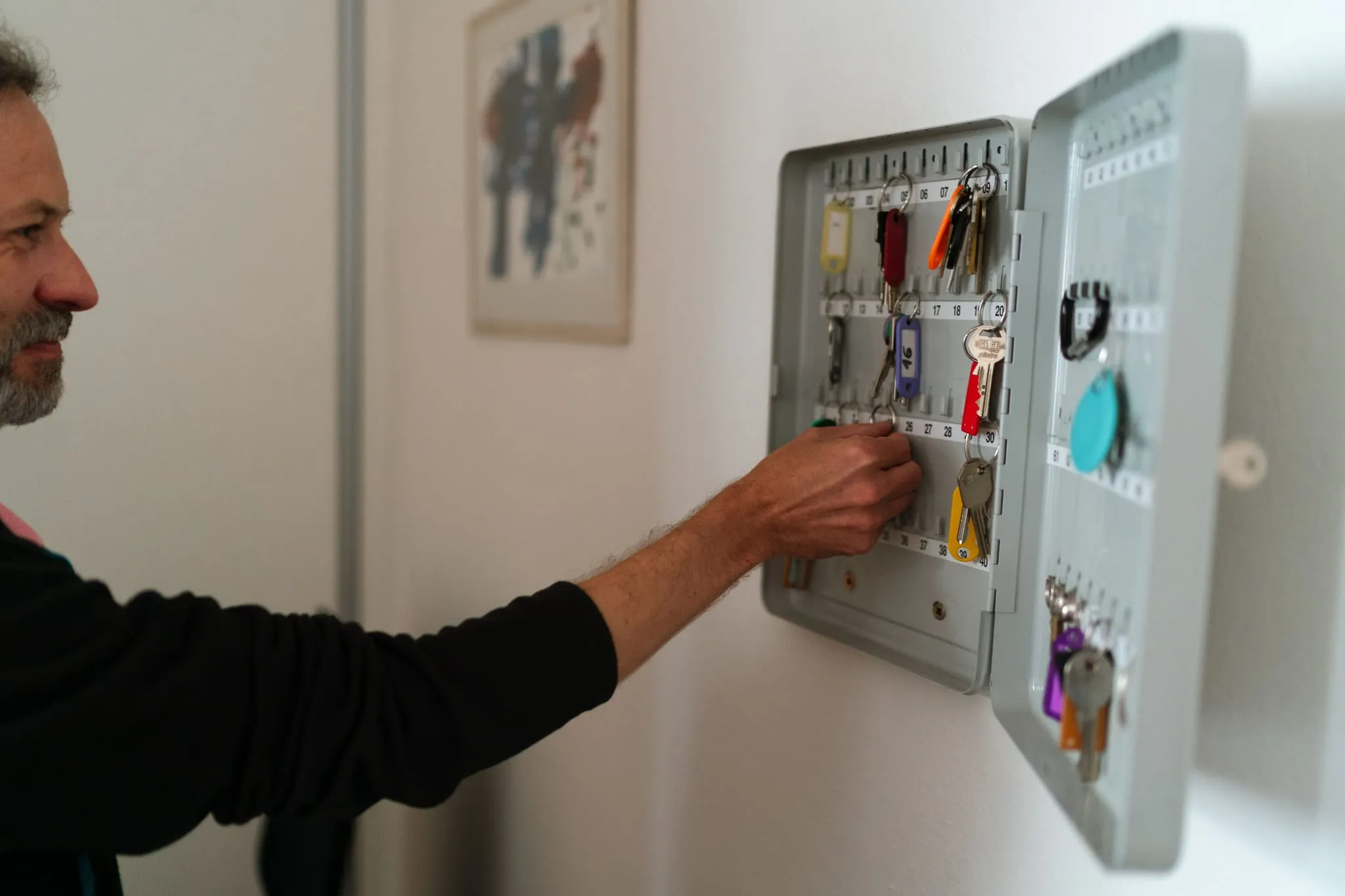
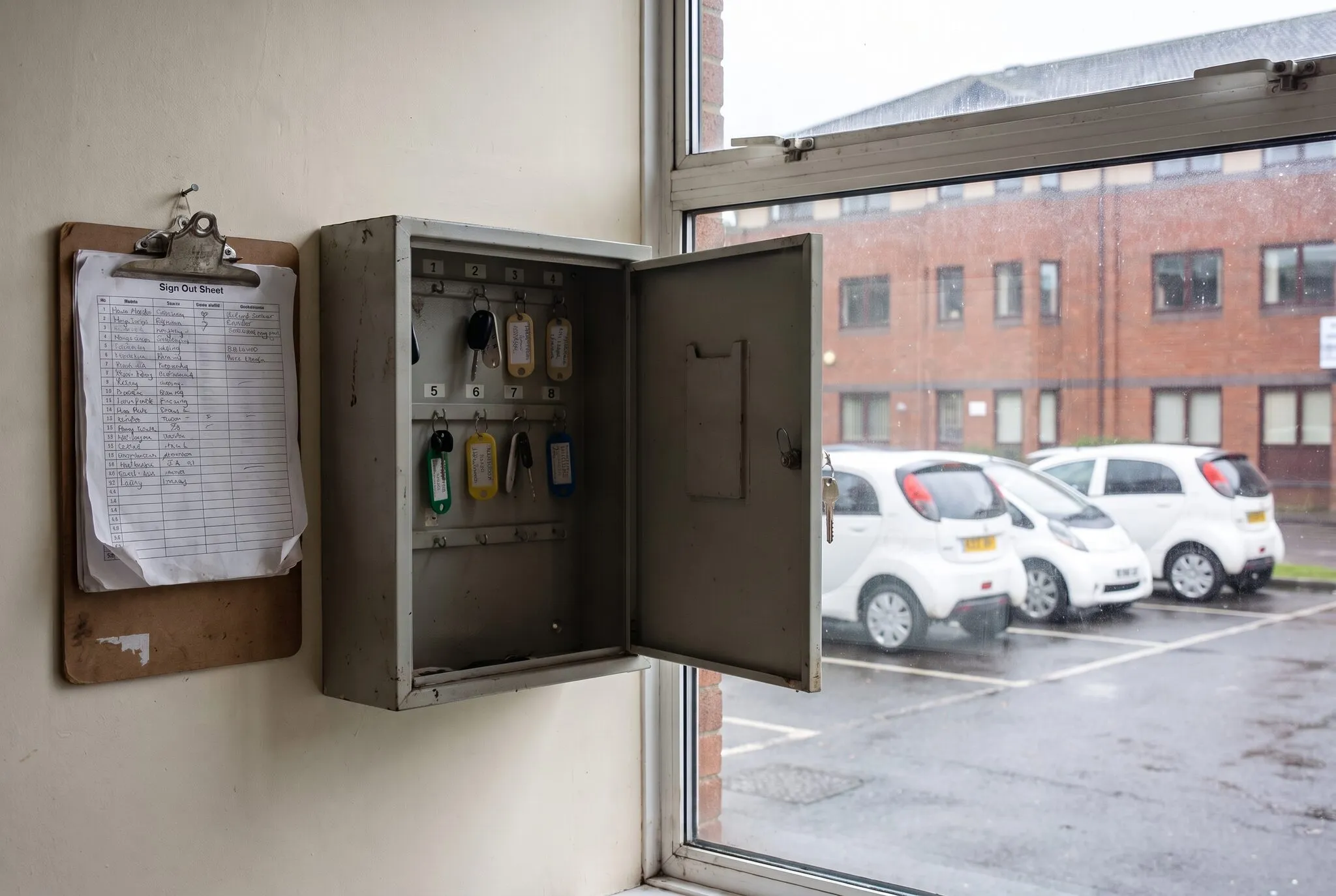
HMRC says employers need to be able to show the conditions have been met, “for instance by keeping mileage records to show when the car was used, by whom and for what journeys”.15 A key cupboard and a paper sign-out sheet can do that if they’re kept up, but they don’t usually record where a car spent the night, and they can be filled in after the fact.
A booking system can supply those records. In a Kerbway pool, staff book and unlock the car from their phone, so every trip is tied to a named, licence-checked driver with a start and end time, and the cars can be located. That gives you a record of who had the car and when, and because the cars can be located, it helps when you’re checking where one spent the night. (We’ve written more about why keyless access helps with pool car status.)16
What should you do next?
- List every car you treat as a pool car, and who drove each one last tax year.
- Count the nights each car spent away from your premises. Anything heading towards 60% needs a closer look, and a car one person takes home most nights isn’t a pool car whatever you call it.
- Ask where the cars are kept overnight and why. “There’s no space at the office” won’t count.
- Before April 2027, agree with your payroll team which cars are pool cars and which are taxable, and write down why.
- If your records can’t show who drove which car and when, fix that first.
How do you check your pool cars at the moment? I’d like to hear what works, and what HMRC asked to see if you’ve been through a review.
Notes // Citations // Disclosures
- Upper Tribunal (Tax and Chancery Chamber), MWL International Ltd and Maywal Ltd v HMRC [2026] UKUT 00062 (TCC) (judgment 6 February 2026), paragraphs 1–15 and 90–92.
- HMRC, Prepare for mandatory payrolling of benefits in kind (9 November 2026)
- Income Tax (Earnings and Pensions) Act 2003, section 167: pooled cars. Section 168 applies the same conditions to vans.
- HMRC, Employment Income Manual EIM23450: pooled cars and vans, general
- HMRC, EIM23470: difficult cases
- HMRC, EIM23455: meaning of private use merely incidental to business use
- HMRC, EIM23460: de minimis private use (Statement of Practice 2/96)
- HMRC, EIM23465: meaning of not normally kept overnight
- HMRC, EIM23485: inadequate parking facilities
- HMRC, EIM23475: periodic check of pooled car or van status
- HMRC, EIM25200: shared car, introduction
- HM Treasury, Budget 2026: Annex A, rates and allowances, company car tax table. Example list prices are illustrative.
- HMRC, Rates and thresholds for employers 2026 to 2027
- HMRC, Expenses and benefits: company cars and fuel
- HMRC, Use of company pooled cars or vans (480: Chapter 15), paragraph 15.1
- Kerbway provides booking, keyless access and reporting for pool fleets, and offers out-of-hours public use. This article isn’t tax advice: check pool car status with your adviser.